

One Small Word in a Condition, One Giant Change for Vendors
/
As we move into the new year, there is one change in the standard Victorian contract that deserves far more attention than it has received.
It is not flashy.
It is not obvious.
And it is buried in wording most people skim straight past.
But for vendors, it quietly changes everything.
The change that looks harmless
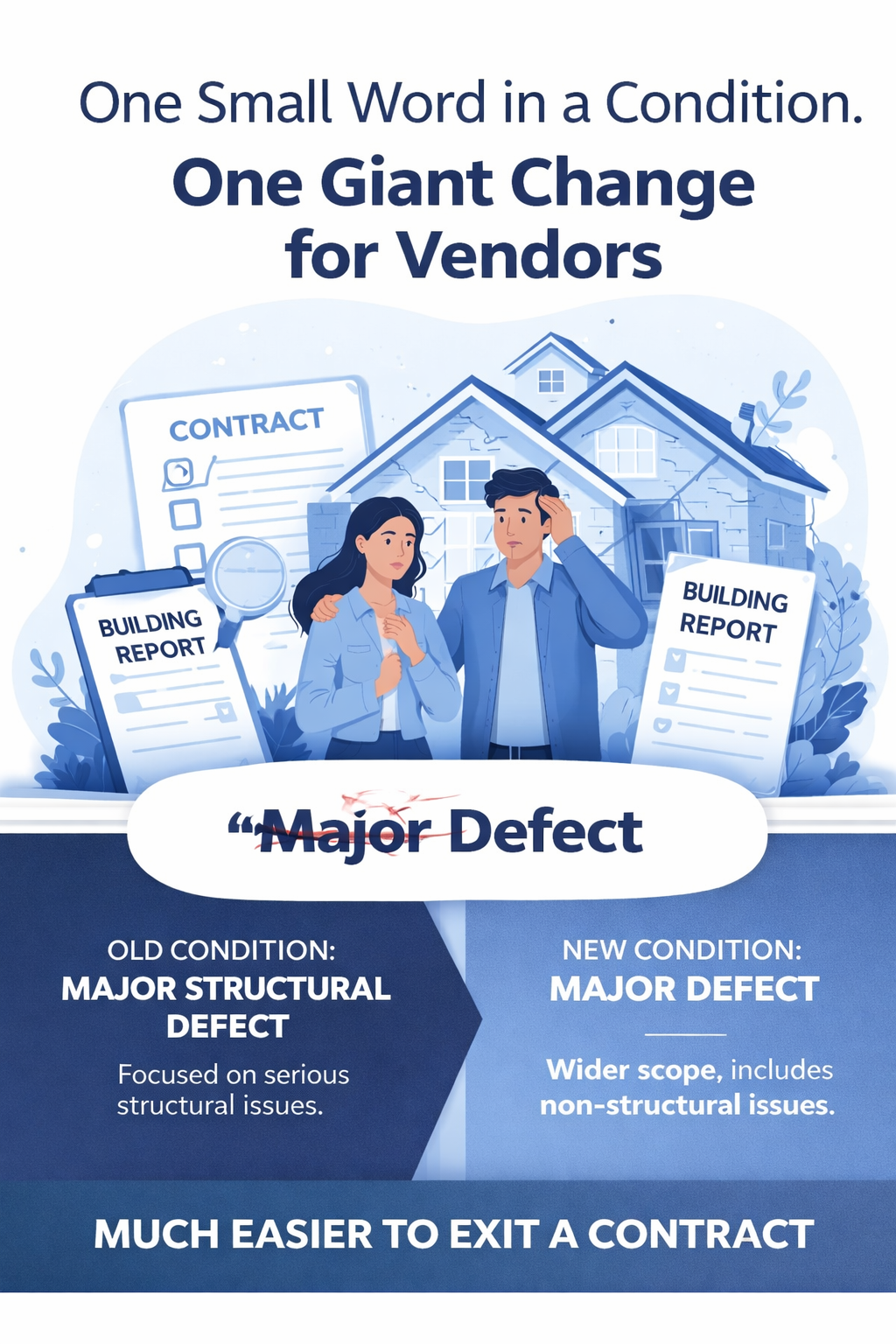
The updated REIV LIV contract amended the building condition so that a purchaser may terminate the contract if a building report identifies a “major defect”.
Previously, the trigger was a “major structural defect”.
At first glance, this looks like a tidy clarification.
In reality, it is a fundamental shift in risk.
Why one missing word matters
A major structural defect is narrow.
It points directly to load-bearing elements, structural integrity, and the core safety of the building. It is technical, difficult to argue, and rarely ambiguous.
A major defect, by contrast, is broad.
It is not confined to structure.
It is not anchored to engineering principles.
It is not objectively measurable in the same way.
That single missing word removes the anchor.
What a “major defect” can now include
Under the current drafting and Australian Standard AS 4349.1-2007, a “major defect” can be argued to include:
• significant water ingress
• roof failure short of collapse
• widespread cracking or movement
• non-compliant construction elements
• serious deterioration
• safety related building failures
None of these need to be structural in the strict sense.
They only need to be labelled “major” by the person preparing the report.
Who gets to decide what is “major”
This is where the second change becomes critical.
The updated contract widened the class of people who can prepare the building report to include:
• registered building surveyors
• registered building inspectors
• registered domestic builders
• architects
On paper, this looks reasonable.
In practice, it lowers the threshold.
You no longer need someone whose role is independent structural assessment. You need someone who is registered, working to an opinion-based standard, and willing to categorise an issue as “major”.
That is not tightening the condition.
That is widening the funnel.
The drafting intent versus the real-world outcome
The stated intention behind the changes was certainty.
The actual outcome is discretion.
More people can write reports.
The definition is broader.
The trigger is easier to reach.
That combination does not reduce disputes. It relocates them and shifts leverage away from the vendor.
Why this matters more in today’s market
In a softer market, building conditions are not just protection clauses. They become strategy tools.
When confidence wobbles, purchasers look for exits.
When finance tightens, reports are scrutinised harder.
When prices stall, defects suddenly become “major”.
The updated wording makes that process easier.
What vendors are discovering too late
Most vendors only learn about this change when it is used against them.
They are told:
“There’s a major defect.”
“The contract allows termination.”
“Our client is exercising their rights.”
By the time the argument starts, the leverage is gone.
This is not about bad inspectors or bad buyers
This is about drafting.
When a contract removes objective boundaries and replaces them with opinion-driven thresholds, outcomes change.
Not because people behave badly.
But because the system allows it.
What vendors should be doing going forward
Vendors should not assume the standard contract protects them.
They should:
• understand how the building condition now operates
• be realistic about how broad “major defect” has become
• consider whether amendments are appropriate before signing
• get advice early, not after the report arrives
One small word. One giant change for vendors.
The removal of the word “structural” looks minor.
In practice, it rewrites the risk balance of the contract.
As we move into the new year, this is one of those changes that will quietly shape outcomes, frustrate sellers, and surprise anyone who assumes “standard” still means safe.
Understanding it now is far cheaper than learning it mid-contract.
Victorian Property Settlements – Trusted for over 25 years by Victorian buyers and sellers.
Visit: www.victorianpropertysettlements.com.au