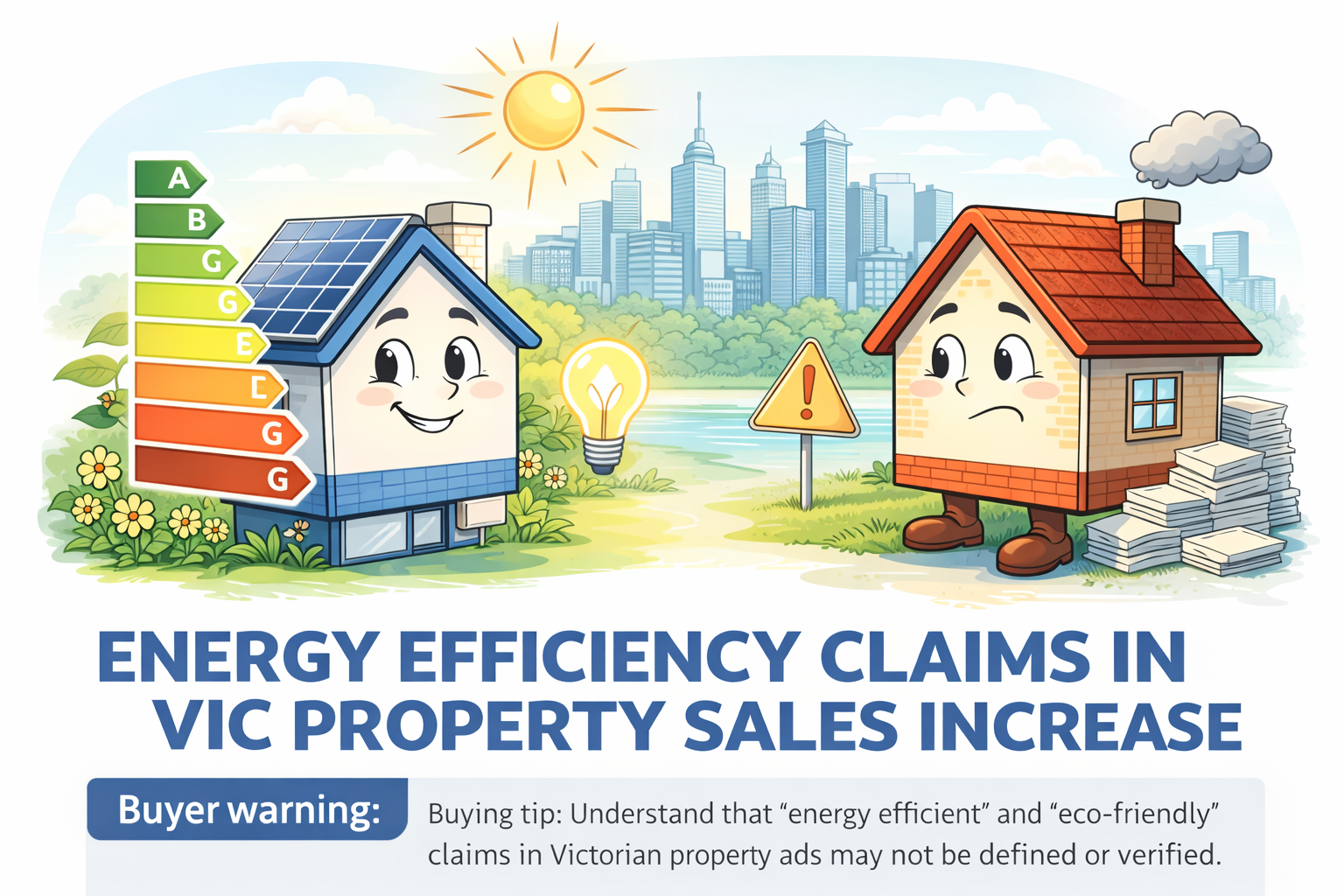
Buyer warning — energy claims
Terms like “energy efficient”, “eco‑friendly” or “sustainable” are not defined or regulated in Victorian sale contracts or ads. They often lack formal energy ratings or independent checks and may only mean small upgrades (e.g. solar panels or LED lights).
Ask specific questions about insulation, heating and cooling, windows/glazing and overall building performance. If energy efficiency matters, allow for the cost of future improvements before you buy.
Green Credentials Are Becoming a Selling Point in Victorian Property
But real energy efficiency improvements are still lagging behind
Energy efficiency is increasingly being used as a selling point in Victorian property listings. Buyers are paying more attention to running costs, comfort, and sustainability, and agents are responding by highlighting features such as solar panels, double glazing and “eco-friendly” upgrades.
However, while the language has changed, the underlying housing stock largely has not.
Across Victoria, many homes being marketed with green credentials have seen little meaningful improvement to their actual energy performance. In practice, the emphasis is often on what could be improved rather than what has been done.
This mirrors trends seen overseas, where sustainability has become part of the sales narrative even though homeowners are not making significant upgrades before selling.
What buyers are actually looking for
Victorian buyers are increasingly conscious of energy costs and long-term affordability. Rising electricity prices, heating costs and a greater awareness of comfort standards mean buyers want to know how a home will perform, not just how it looks.
Features such as solar systems, insulation, efficient heating and cooling, and window performance now influence buyer decisions, particularly for family homes and higher-value properties.
Yet many listings still rely on vague descriptions rather than measurable outcomes.
Phrases like “energy efficient”, “eco-friendly” or “sustainable design” are often used without any supporting information or evidence.
Disclosure gaps remain
Unlike some overseas jurisdictions, Victoria does not currently require a standardised energy efficiency rating to be disclosed at the point of sale for most existing homes.
As a result, buyers are left to infer performance based on age, appearance and anecdotal information rather than objective data.
For older homes in particular, this creates a disconnect between marketing language and reality. A home built 50 or 70 years ago may have solar panels added, but still lack insulation, efficient glazing or modern heating systems.
The presence of one upgrade does not necessarily translate into an energy-efficient home.
Why upgrades aren’t happening
The reasons are largely practical.
Many vendors do not want to invest significant money shortly before selling, particularly when upgrades may not produce a clear dollar-for-dollar return.
Others find the process confusing or assume buyers will undertake improvements themselves.
As a result, sustainability is often treated as a marketing feature rather than a genuine improvement strategy.
What this means for Victorian buyers and sellers
For sellers, genuine energy improvements can add real appeal and reduce buyer uncertainty, especially in competitive markets.
For buyers, it is important to look past the language and focus on substance. Ask questions about insulation, heating systems, glazing and overall performance, rather than relying on broad descriptions.
As energy costs continue to rise, transparency around energy efficiency will become increasingly important in Victorian property transactions.
Until clearer disclosure standards are adopted, both buyers and sellers should approach green claims with a practical and informed mindset