

The Suburbs Where You Need to Wait for Someone to Die
/
For many Victorians trying to buy a home, the biggest challenge is not the price.
It is finding a property that is actually available.
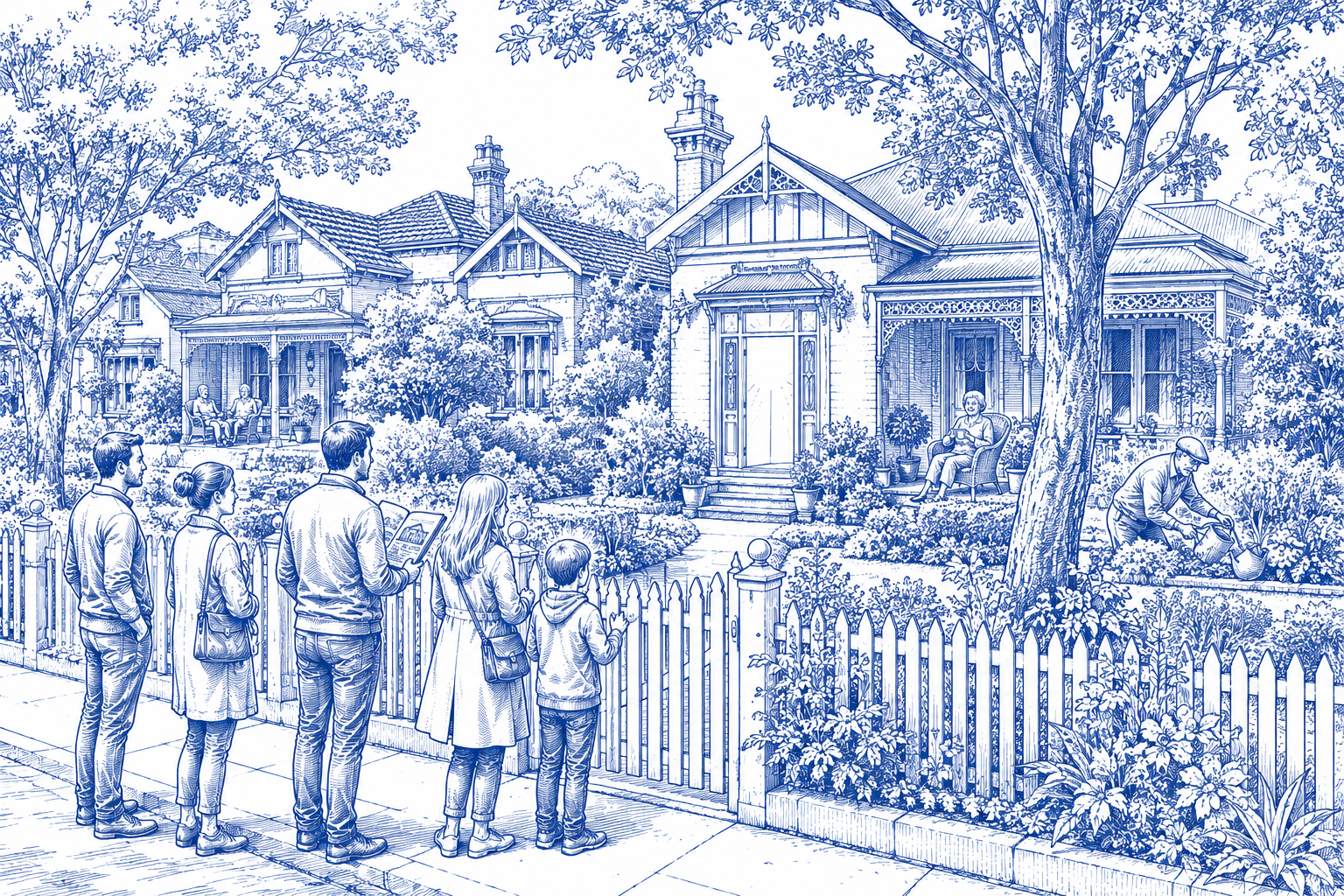
Across Melbourne and regional Victoria there are suburbs where homes are held by the same families for decades. Owners move in, raise children, retire, and often remain in the property until they pass away or move into aged care.
As a result, the number of homes available for sale each year can be incredibly small.
Local real estate agents often describe these areas as "tightly held", but buyers use a much blunter description.
"They only come up when somebody dies."
While the phrase may sound harsh, it reflects the reality of supply and demand in some of Victoria's most sought-after locations.
Why Some Suburbs Rarely See Sales
Several factors contribute to low turnover.
Many of these suburbs were developed in the 1950s, 1960s and 1970s when large blocks of land were affordable and families purchased homes with the intention of staying for life.
Unlike newer growth corridors where residents frequently upgrade or relocate, established suburbs often have:
• Long-term owner occupiers
• High levels of outright home ownership
• Strong community connections
• Limited redevelopment opportunities
• Excellent schools and transport
• Proximity to employment centres
The result is a property market where supply remains permanently constrained.
Melbourne's Tightly Held Suburbs
While market conditions change, suburbs frequently identified as having very low turnover include:
• Beaumaris
• Park Orchards
• Warrandyte
• Blackburn North
• Balwyn
• Mont Albert
• Research
• Eltham
• Briar Hill
• Sandringham
In many streets within these suburbs it is not unusual for the same owners to have occupied their homes for thirty, forty or even fifty years.
When a property finally reaches the market it often attracts significant interest simply because opportunities are so rare.
The Hidden Impact on Prices
Most people assume house prices rise because demand increases.
However, in many established suburbs, prices are driven just as much by a lack of supply.
If only a handful of homes become available each year, buyers have little choice but to compete aggressively.
This creates a cycle where:
Existing owners stay longer.
Fewer properties become available.
Competition intensifies.
Prices increase.
Entry becomes harder for younger buyers.
The shortage becomes self-perpetuating.
An Ageing Population Creates New Opportunities
Victoria's ageing population may gradually change the equation.
Over the next twenty years many suburbs with large populations of long-term owners are expected to experience increased turnover as estates are settled and properties pass to the next generation.
For buyers, this could create opportunities that have not existed for decades.
For sellers and beneficiaries, it may also create periods where multiple similar properties enter the market at the same time.
Understanding these demographic shifts can be just as important as understanding interest rates.
Looking Beyond the Listing Numbers
When analysing a suburb, buyers often focus on current listings.
A more useful question can be:
"How many homes change hands each year?"
A suburb with low turnover may offer excellent long-term growth prospects because the underlying shortage of housing is structural rather than temporary.
The challenge is often gaining access to a property before everyone else notices it is available.
The Bottom Line
Some Victorian suburbs have become so tightly held that opportunities to buy can be separated by years rather than months.
While "waiting for someone to die" is an uncomfortable phrase, it highlights a genuine market reality.
In parts of Melbourne, the biggest obstacle facing buyers is not affordability.
It is simply finding an owner willing to sell.
As housing shortages continue across Victoria, tightly held suburbs are likely to remain among the most competitive and closely watched markets in the state.