

Have Young Australians Been Encouraged Into Too Much Housing Debt?
/Have Young Australians Been Sold a Dream They Can't Afford?
For the past several years, Australians have been told that the answer to the housing crisis is to help more people enter the property market with smaller deposits.
Government schemes allowing eligible buyers to purchase with as little as 5% deposit have been promoted as a pathway to home ownership. On the surface, this sounds like a positive step. After all, many young Australians struggle to save the traditional 20% deposit required by lenders.
The problem is that reducing the deposit requirement does not automatically make housing more affordable.
In many cases, it simply allows buyers to borrow more money and bid higher prices for the same properties. When thousands of buyers are given access to additional borrowing capacity, demand increases. If housing supply does not increase at the same rate, prices can rise further.
The result is that many first home buyers may find themselves taking on larger mortgages than previous generations ever imagined.
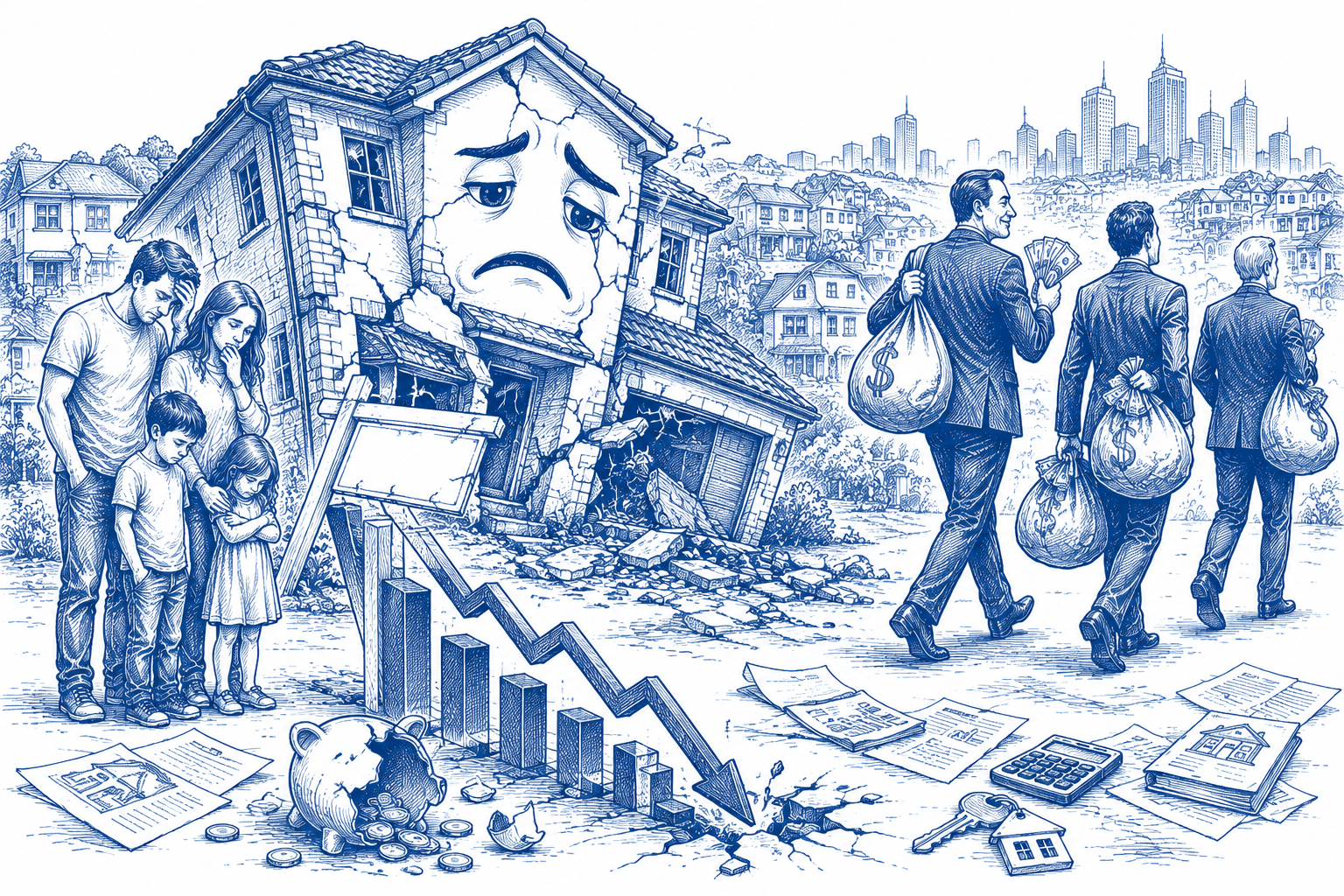
Consider a young couple purchasing a home with a 5% deposit. They may enter the market sooner, but they also begin with very little equity. If property values were to fall by 10% or 20%, that equity could disappear overnight, leaving them owing more to the bank than their property is worth.
This is known as negative equity.
For many households, negative equity is not an immediate disaster if they remain employed and continue making repayments. However, it can make it difficult to refinance, move for employment opportunities, or sell the property without suffering a financial loss.
The situation becomes more concerning if interest rates begin rising again.
Many buyers entered the market during a period of historically low interest rates and government support. If future economic conditions require rates to increase, households carrying large debts may face significantly higher repayments at a time when they already have limited equity.
This raises an important question.
Have government policies genuinely improved housing affordability, or have they simply helped inflate prices while encouraging younger Australians to take on larger and larger debts?
There is no easy answer.
Australia needs more housing. It needs planning reform, faster approvals, improved infrastructure, and increased supply. Simply making it easier to borrow money does not solve the underlying shortage of homes.
Young Australians deserve the opportunity to own a home. They also deserve honest conversations about the risks of high debt, small deposits, and the possibility that property values do not always rise forever.
Housing should provide security and stability. It should not become a financial trap for those who can least afford it.
As property professionals, we believe governments should focus on improving supply and affordability rather than encouraging ever larger levels of debt amongst first home buyers.
The dream of home ownership remains important. The challenge is ensuring that the dream remains sustainable for the next generation.